
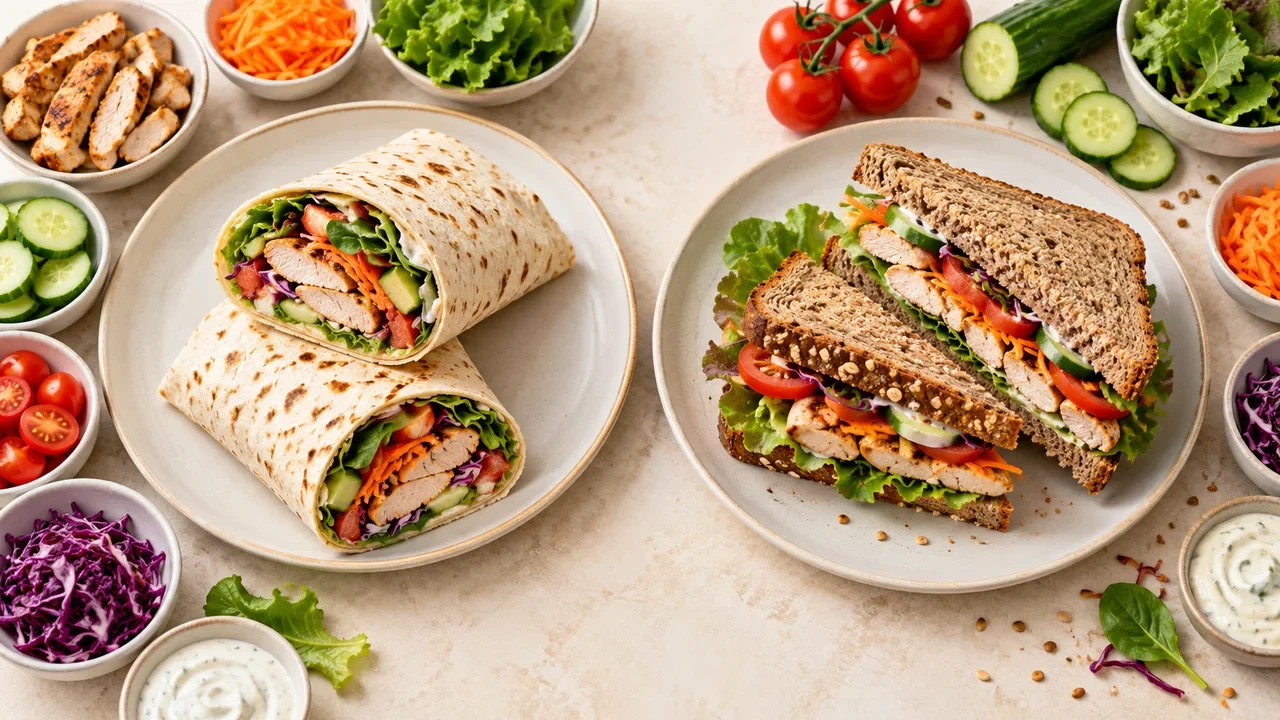
Illustrative editorial image generated with AI.
A wrap is not automatically a lighter or more nutritious lunch than a sandwich. The useful comparison is the amount of flatbread or sliced bread you actually eat, plus what goes inside. A small whole-grain wrap and a large restaurant tortilla are different products, even if the menu uses the same word.
Start with the portion, not the shape
Check whether the nutrition label describes one wrap, half a wrap, one bread slice or two. The FDA’s label-reading guide explains that nutrient amounts refer to the stated serving and must be scaled when you eat a different quantity. A serving size on a label is not a personal instruction about how much you should eat.
Two comparisons answer different questions. Values per 100 grams help compare the products themselves. Values for the amount going into your lunch help compare the meal you will actually eat. Use both where available; neither should be silently substituted for the other.
A worked example with invented labels
These figures are hypothetical, not measurements of particular brands. Suppose one 70-gram wrap lists 210 calories, 4 grams of fibre and 400 milligrams of sodium. Two bread slices weighing 70 grams together list 180 calories, 6 grams of fibre and 300 milligrams of sodium.
| Lunch base | Amount eaten | Calories | Fibre | Sodium |
|---|---|---|---|---|
| Example wrap | One, 70 g | 210 | 4 g | 400 mg |
| Example bread | Two slices, 70 g | 180 | 6 g | 300 mg |
In this example the bread has less energy and sodium and more fibre for equal weight. Change the products and the result can change. Comparing the full wrap with only one of those bread slices would answer a different portion question and could make the difference look larger than it is.
Read the ingredients alongside the numbers
Color and words such as “spinach,” “multigrain” or “artisan” do not tell you the amount of whole grain. Look at the ingredient list for the grain actually used. FDA’s dietary-fibre guide explains that ingredients appear in descending order by weight and gives examples of whole-grain ingredients.
Then use the fibre value to compare the actual portion. A product may obtain fibre from ingredients other than whole grain, so the ingredient list and nutrition panel answer related but distinct questions. For the wording issue, see our guide to multigrain versus whole-grain bread.
Put the same filling into both calculations
To isolate the base, compare a wrap and sandwich with the same quantity of filling. Then compare the complete lunches you would realistically prepare. A larger tortilla may encourage a larger filling, while a sandwich may come with a different sauce or side. Those choices can matter more than the base difference in the example.
Make the filling visible: write down the protein source, vegetables, spread, cheese and sauce rather than assigning a meal a single “healthy” label. There is no need to treat every added ingredient as a mistake. The point is to understand the meal instead of letting a thin-looking wrapper hide its contents.
A quick shopping routine
- Choose the portion you expect to use.
- Read the serving weight and scale the panel to that portion.
- Compare fibre and sodium as well as energy.
- Check the grain ingredients and any ingredients you need to avoid.
- Compare price per usable portion and whether the product stays practical for your lunches.
If you need gluten-free food, inspect the product’s actual suitability; a wrap’s appearance is not evidence that it is wheat-free. If a clinician has given you a specific dietary target, use that target when comparing labels.
The better lunch base is the one that fits your meal, preferences and needs with its portion understood. Wraps and bread can both work. Neither shape earns an automatic nutritional advantage.