Origins of Döner, Shawarma, and Gyro
Döner, Shawarma, and Gyro share a common method of preparation but have distinct cultural roots. Döner originated in Turkey, Shawarma in the Middle East, and Gyro in Greece. Each dish reflects the culinary traditions of its region.
Cooking Technique: The Vertical Rotisserie
All three dishes are cooked on a vertical rotisserie, allowing the meat to cook evenly and retain its juices. This technique is key to their texture and flavor.
Variety of Meats Used
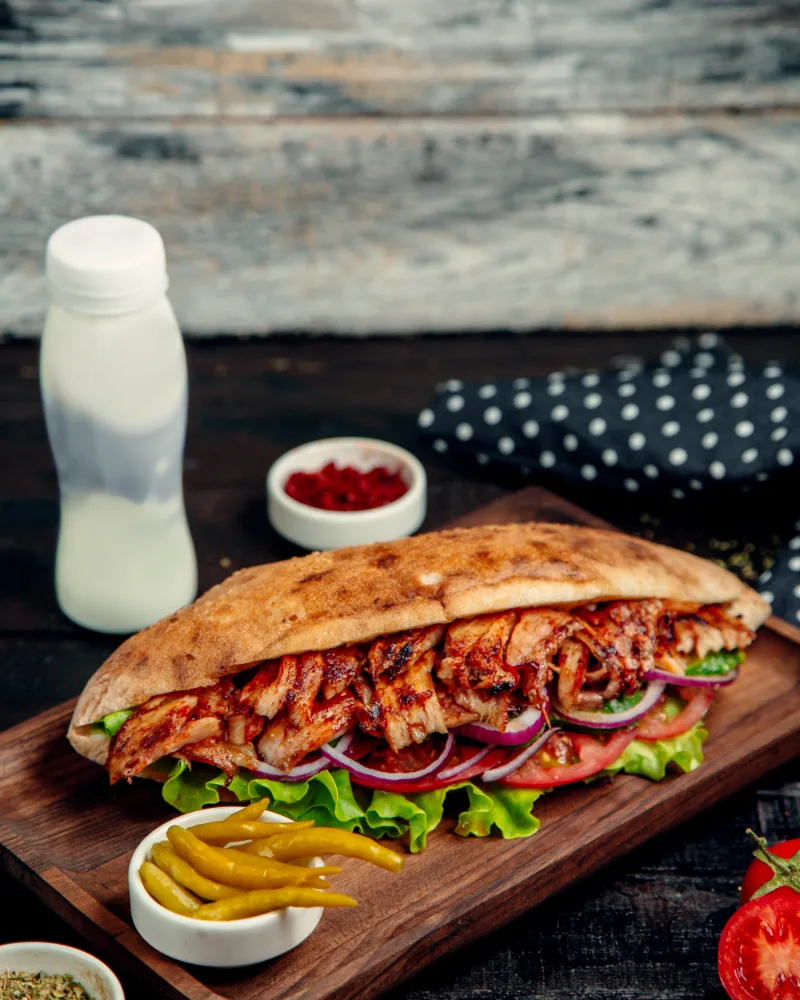
Döner typically uses lamb, beef, or chicken. Shawarma often includes lamb, chicken, or turkey, while Gyro is predominantly made with pork or chicken.
Marination and Spices
The marination process varies significantly. Döner is often seasoned with simple spices, Shawarma is known for its rich blend of spices such as cumin, turmeric, and garlic, and Gyro features oregano and other Mediterranean herbs.
Serving Styles and Accompaniments
Döner is commonly served in flatbreads or pita, Shawarma in pita or wraps, and Gyro in pita bread. Each dish is accompanied by different sauces and garnishes, like tzatziki for Gyro and tahini for Shawarma.
Global Popularity
These dishes have gained worldwide popularity, with each adapting slightly to local tastes. They are celebrated for their rich flavors and convenient serving style.
Explore more about these dishes and their cultural significance on Trapfood's Culture section.