Illustrative editorial image generated with AI.
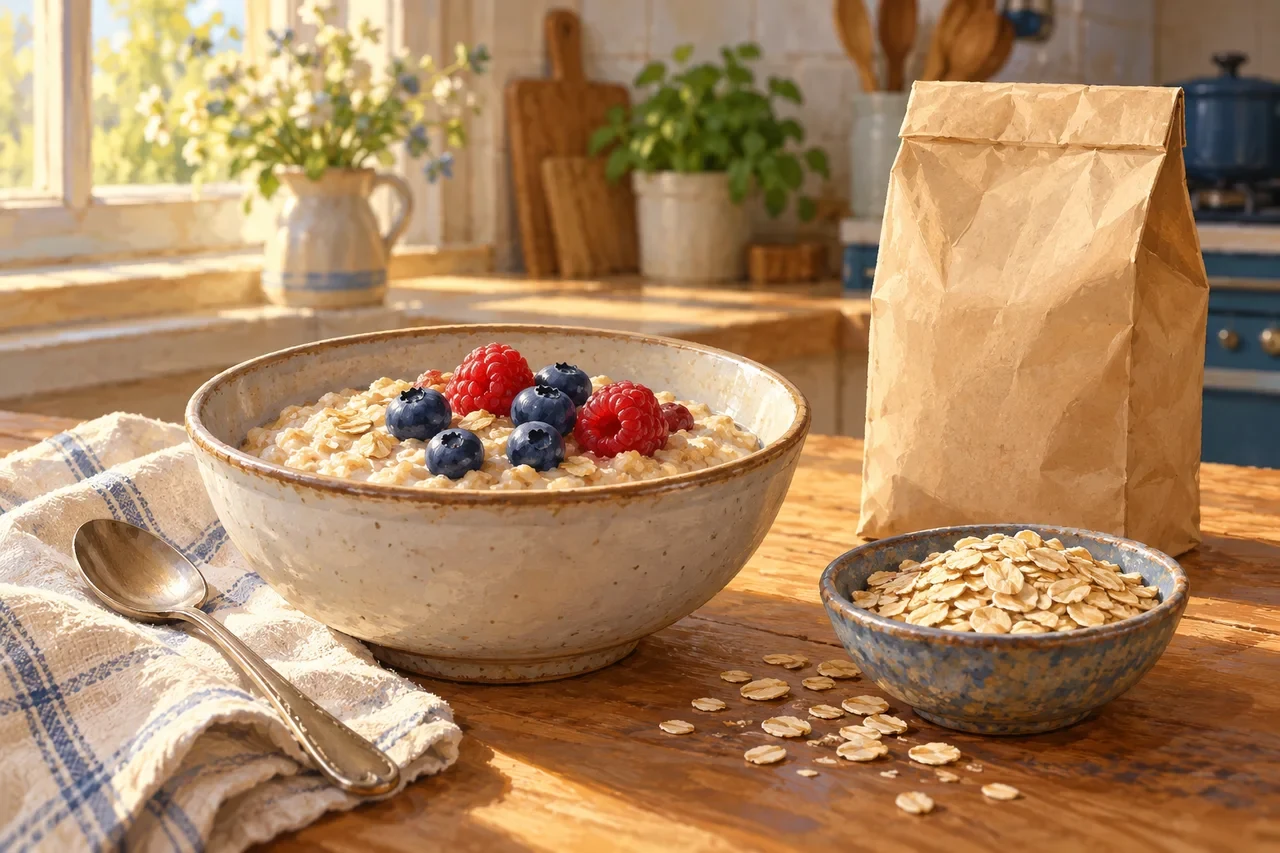
Instant oatmeal can be a useful whole-grain breakfast. Cooking quickly does not, by itself, make oats nutritionally worthless. The better comparison is between actual products and the bowl you prepare: the oats, any added sweeteners, the portion and what you eat alongside it.
Separate the oats from the flavour packet
Plain instant oats and a sweetened flavoured packet can share the same grain while differing in their other ingredients. Look for whole-grain oats in the ingredient list, then check the rest of the formulation. Quaker's regular instant-oatmeal listing provides one manufacturer example made with whole-grain oats; it is an illustration, not a recommendation for every product carrying the brand.
“Instant” describes convenience. It does not tell you how much sugar or sodium a packet contains. Similarly, a long cooking time does not make a bowl with generous syrup and sugary toppings automatically better. Compare what you would actually eat.
Read the label in a useful order
- Check the serving size and how many servings you plan to use.
- Compare fibre, protein, added sugars and sodium for comparable amounts.
- Read whether the values refer to the dry product or to a prepared serving.
- Include the milk, sweetener and toppings you add yourself.
The FDA explains that a labelled serving size is not an instruction about how much to eat. Two packets mean a different bowl from one packet; adding water changes volume without adding nutrients, while milk or other ingredients change the meal.
Use sweetness deliberately
On US labels, total sugars and added sugars are different entries. The FDA's added-sugar explanation clarifies that naturally occurring sugars in milk or fruit are not the same category as added sweeteners. Honey or maple syrup added at home still contributes added sugar.
If a favourite packet tastes too sweet, try mixing it with plain oats and adjust the liquid according to the instructions. Alternatively, start plain and add fruit, cinnamon or a measured amount of your preferred sweetener. These are practical options, not a requirement to remove every enjoyable flavour.
Build a breakfast that fits your morning
Fruit plus yogurt, milk or an appropriate alternative can make a different meal from oats prepared only with water. Nuts or seeds may add texture where allergies allow. The USDA whole-grain tip sheet includes oatmeal among breakfast options.
Choose a portion that suits your appetite and overall eating pattern. A convenient breakfast you can prepare consistently may be more useful than a theoretically perfect one you regularly skip. For a condition requiring specific carbohydrate or dietary management, adapt the meal with your clinician or dietitian instead of relying on an “oats are healthy” slogan.