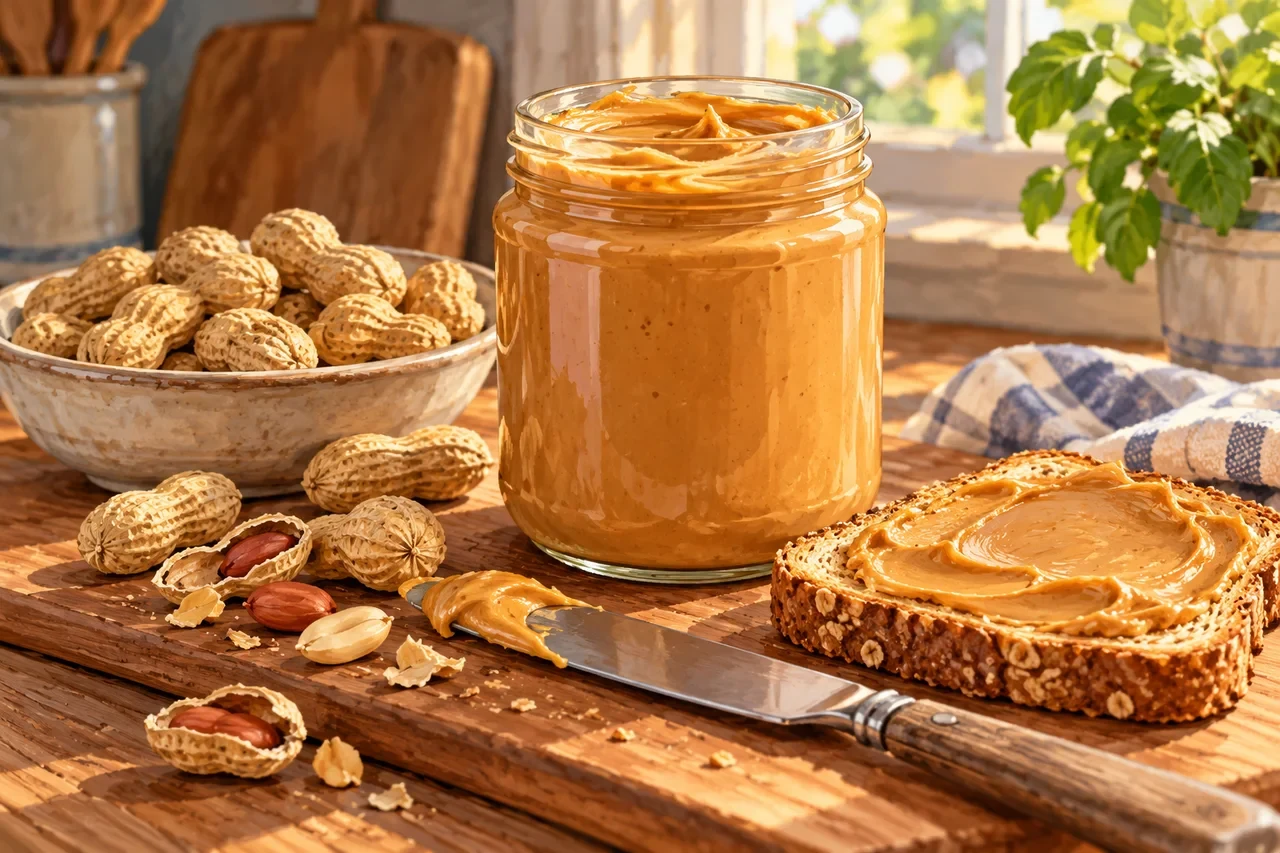
Illustrative editorial image generated with AI.
Peanut butter can contribute protein and fats to a meal, but the product name is not a complete nutrition assessment. A jar made mainly from peanuts and a sweet peanut-flavoured spread can serve different purposes. Check the actual ingredients, nutrition panel and amount you use.
Start with what is in the jar
Peanuts should be central to a peanut-based spread, but added sugar, salt and other fats vary. The FDA's ingredient guidance explains that US ingredient lists generally run from the greatest to the smallest amount by weight. That makes the list useful for understanding what a product primarily contains.
A shorter list may make comparison easier, but ingredient count is not a safety score. An unfamiliar ingredient name does not prove a product is harmful. Conversely, reassuring packaging or a “natural” style of branding does not tell you its sugar, sodium or saturated-fat content.
Compare equal amounts, then your real portion
Use the same weight when comparing two jars. A smaller stated serving can make one product look lower in calories or sugar even when the difference mostly reflects the portion. Then consider how much you actually spread on toast, stir into porridge or add to a sauce.
You do not need a permanent weighing routine to learn what a serving looks like. Measuring your usual spoonful once can reveal whether it matches the label. A heaped spoon and a level spoon can make very different contributions, especially if you return to the jar several times.
Protein does not make the whole meal
The USDA MyPlate protein-food guide includes peanut butter among protein-food choices. That does not make it interchangeable gram for gram with every other protein source, or mean a thick layer supplies everything breakfast needs.
Think about the role you want it to play. On whole-grain toast with fruit, it contributes to one meal pattern; mixed with icing sugar and chocolate, it contributes to a dessert. Both uses can be intentional. Calling the second mixture “high protein” does not erase its other ingredients.
Match the jar to your priorities
If you want less added sugar or sodium, compare those entries directly rather than assuming all plain-looking jars are alike. If texture or easy spreading matters, weigh that preference alongside the nutrition differences. There is no need to classify every jar as either perfect food or forbidden dessert.
Allergies take priority over the comparison
Peanuts are a major food allergen. Anyone with a peanut allergy should follow their avoidance and emergency plan rather than testing a “cleaner” brand. The FDA's allergy guidance explains label reading and serious reactions. For everyone else, choose a product you enjoy, use a portion that fits the meal and evaluate the wider eating pattern.